
Remodeling a Historic Home’s Kitchen Without Losing Its Charm
Older homes often come with kitchens that feel distinctly different from those in new builds. The windows sit a little higher, the trim has character and the room embodies the logic of the era in which it was built. The challenge is to introduce modern performance without compromising the details that make it special. With a thoughtful plan, a historic kitchen remodel can feel more considered and functional while still blending seamlessly with the home’s character.
Understand What Makes the Kitchen Special
Before considering layouts or finishes, it is essential to understand what gives the kitchen its character and identity. In many historic homes, this is a mix of original millwork, window proportions, flooring materials, and built-in elements like hutches or breakfast nooks. Even smaller details like the profile of the casing or how cabinets meet the ceiling define the room.
A preservation-first mindset doesn’t mean freezing the kitchen in time. It means identifying the features that matter so new design decisions support them. We note what’s original, what’s been added later, and what’s worth restoring. That baseline makes it easier to decide where to invest and where we can modernize without regret. Often, the charm of a home lives in details that aren’t always noticed consciously—a shallow arch, the way a window stool meets the wall, or a vent cover with a particular grid all contribute to authenticity.
Improve Flow Without Flattening the Architecture
Most historic kitchens were designed for a different rhythm of daily life. Storage was modest, appliances were smaller, and cooking zones were tighter. Today’s kitchens center on better workflow, clearer sightlines, improved connections to dining areas, and more room for gathering. The challenge is achieving these goals while respecting the home’s original proportions.
Careful, strategic moves can improve function while preserving the architectural integrity of the kitchen. Widening a doorway, shifting a pantry, or reworking an underutilized corner can solve real problems without compromising the architecture. Even modest changes can open up the room and improve flow without changing the architectural language.
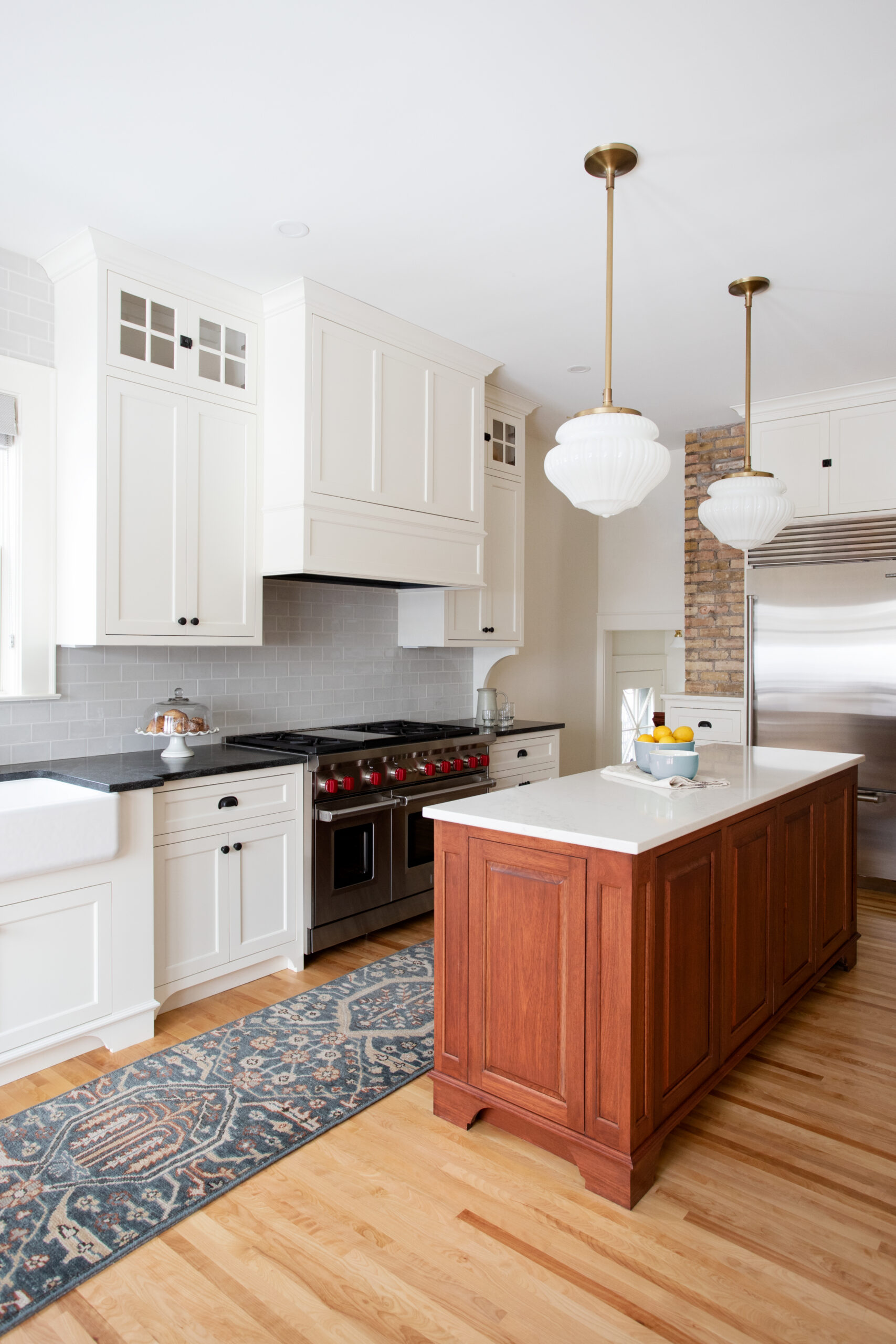
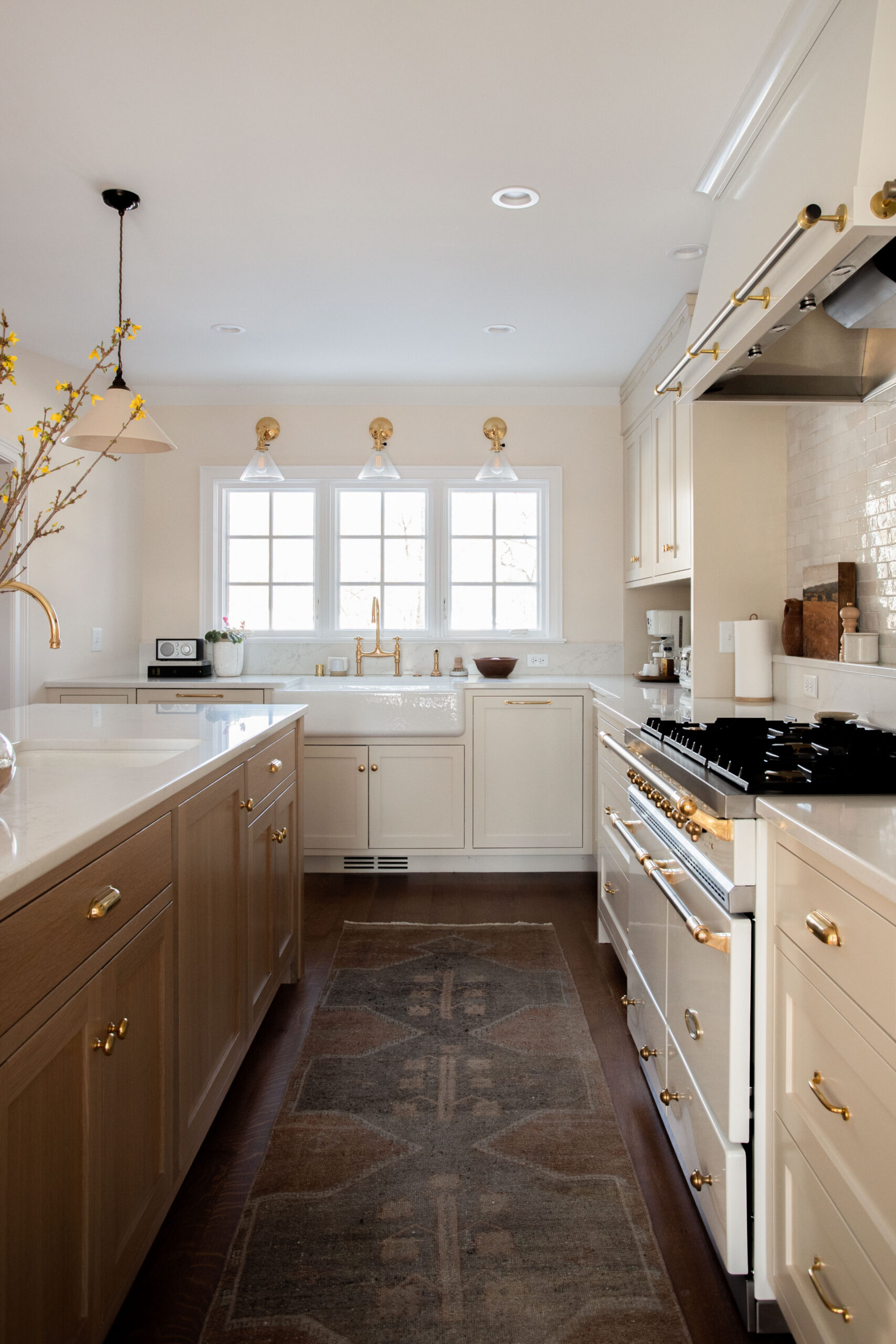
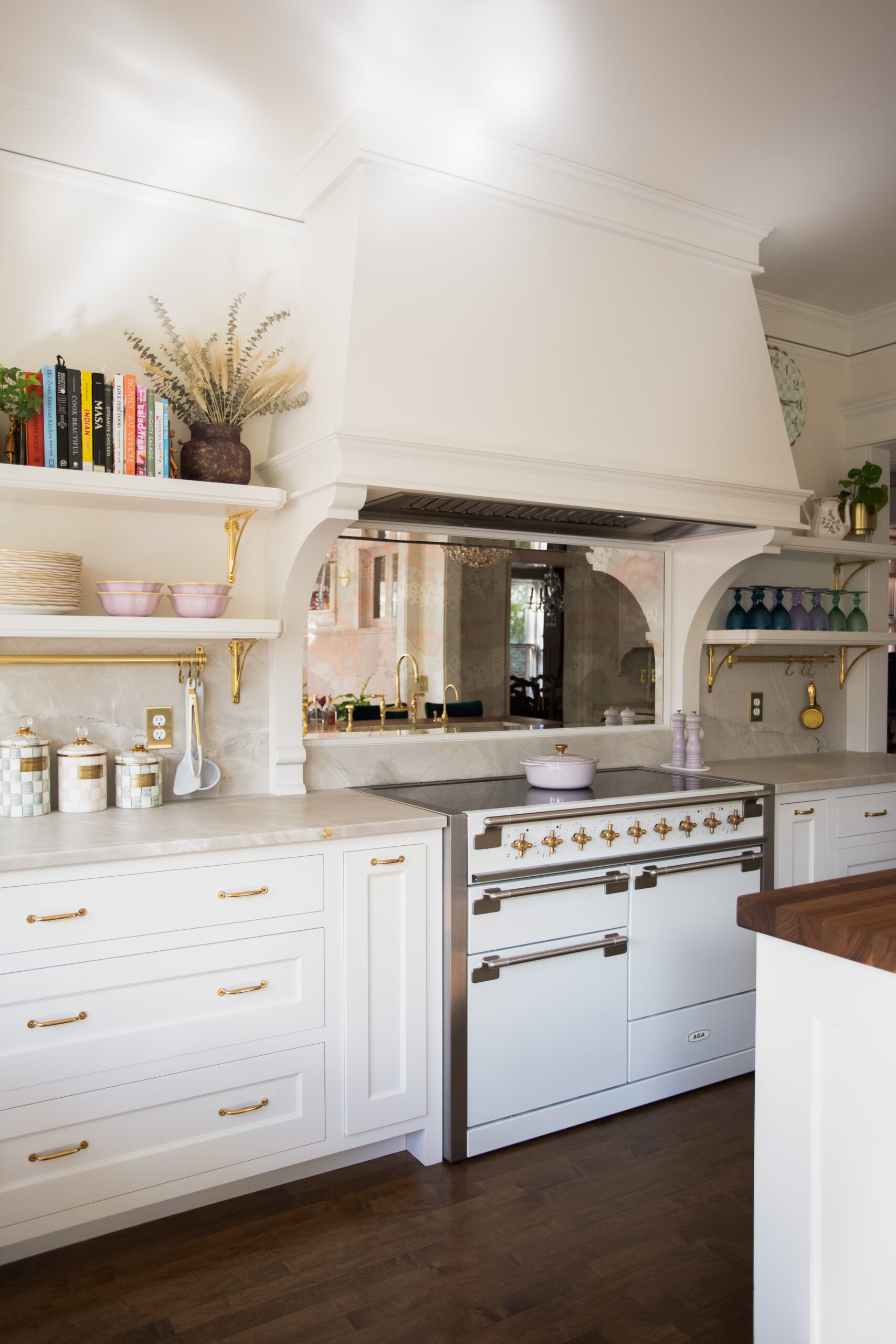
Design Custom Cabinetry That Matches the Home’s Language
Cabinetry is where many historic kitchen remodels often lose their charm by choosing a cabinet style that doesn’t reflect the home’s architectural character. Door profiles, rail widths, and the scale of uppers to lowers all matter. How cabinetry aligns with trim and ceiling lines is equally important.
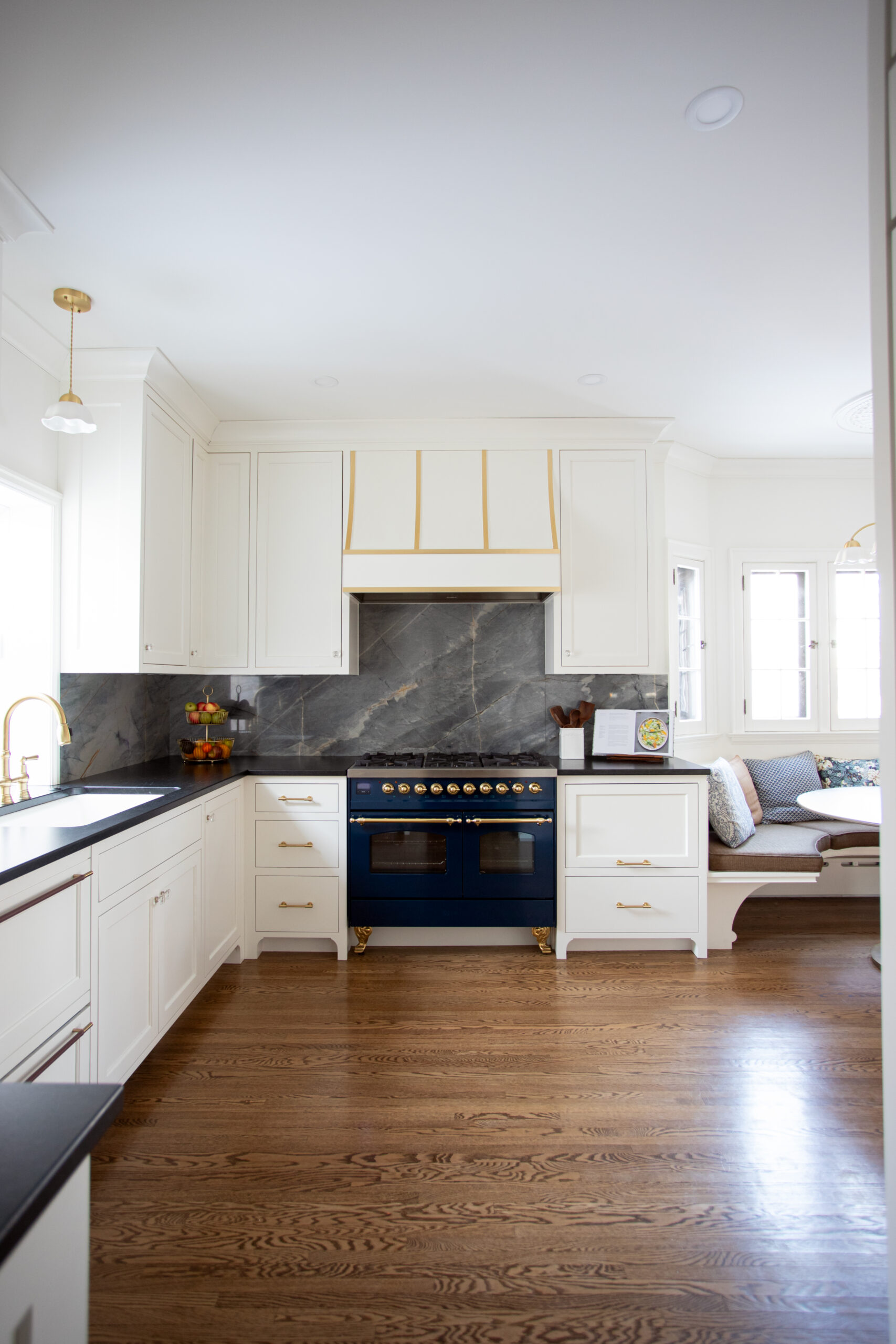
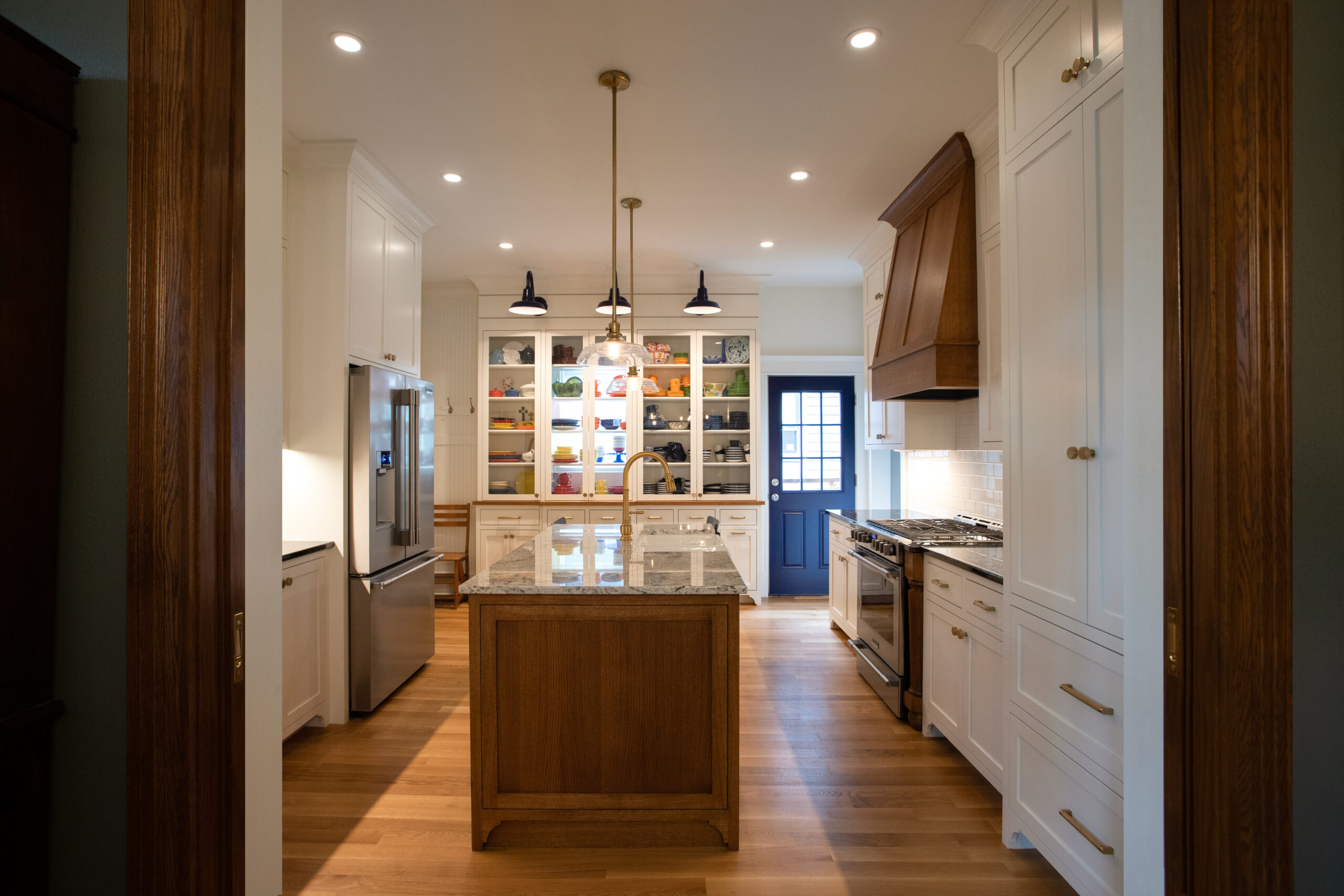
In some kitchens, original cabinets are worth restoring. In others, they’re too compromised or too limited for modern use. When building new cabinetry we aim for styles that match the rest of the home’s character—inset doors, furniture-inspired bases, or face frame profiles that echo existing millwork. A pantry wall can be highly functional without looking like a modern insertion if the proportion and detailing respect the home. Custom work also gives us better transitions. Built-ins, banquettes, and niche storage can be designed as though they were always part of the house. Drawers sized for your needs, spice pullouts positioned where you need them, and appliance garages that keep counters clear,all while honoring a Craftsman, Victorian, Tudor, or Colonial Revival aesthetic.
Choose Materials and Details That Age Well
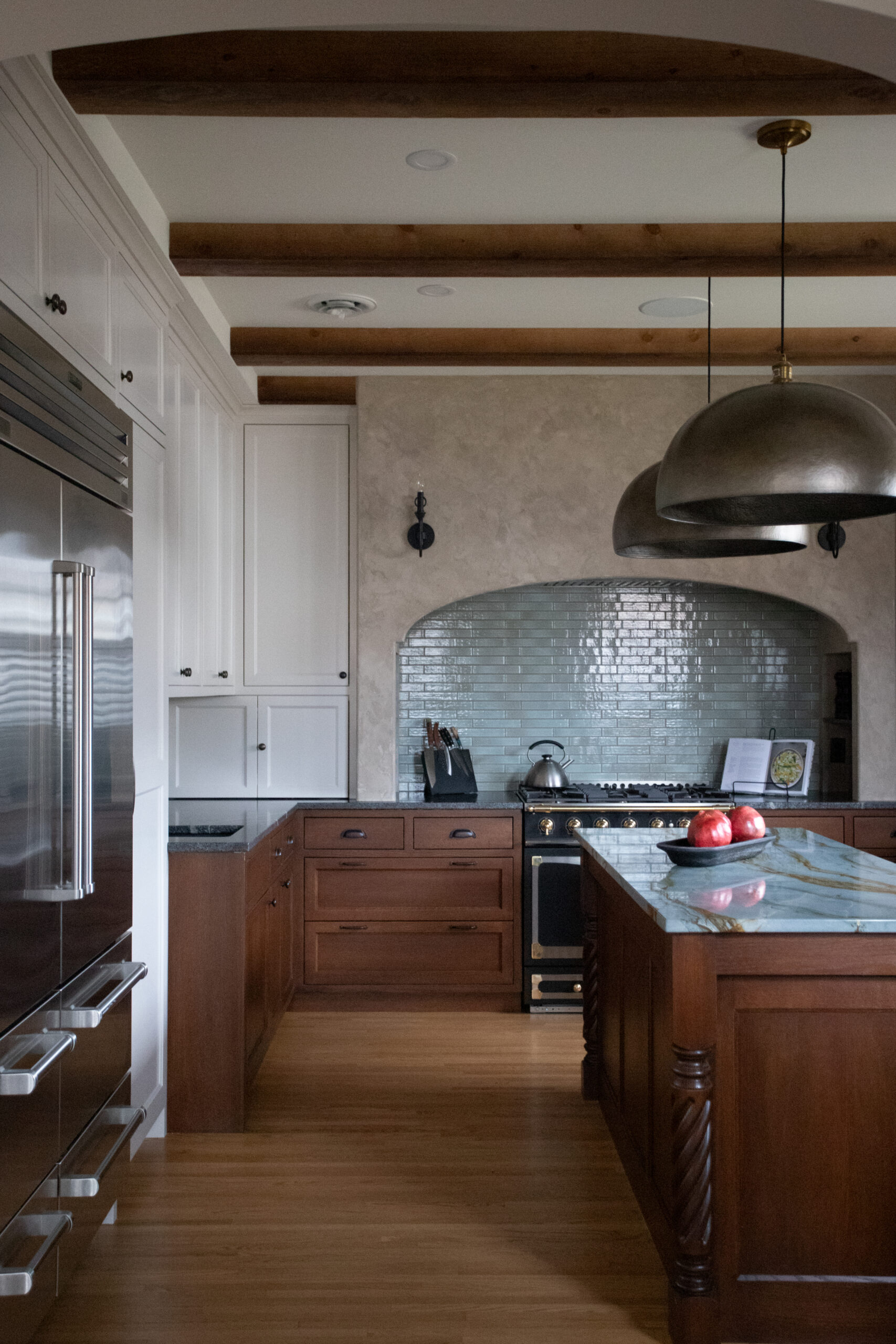
Materials carry significant responsibility in a kitchen remodel. The goal isn’t recreating a museum version of the past, but instead it’s choosing finishes that feel compatible with the home, age well, and bring your vision to life. Countertops and backsplashes can stay historically appropriate through pattern and edge detail. Tiles can feel period-friendly through color, scale, and layout. Flooring should relate naturally to the rest of the home. Where original hardwood exists, restoring it is often worth considering.
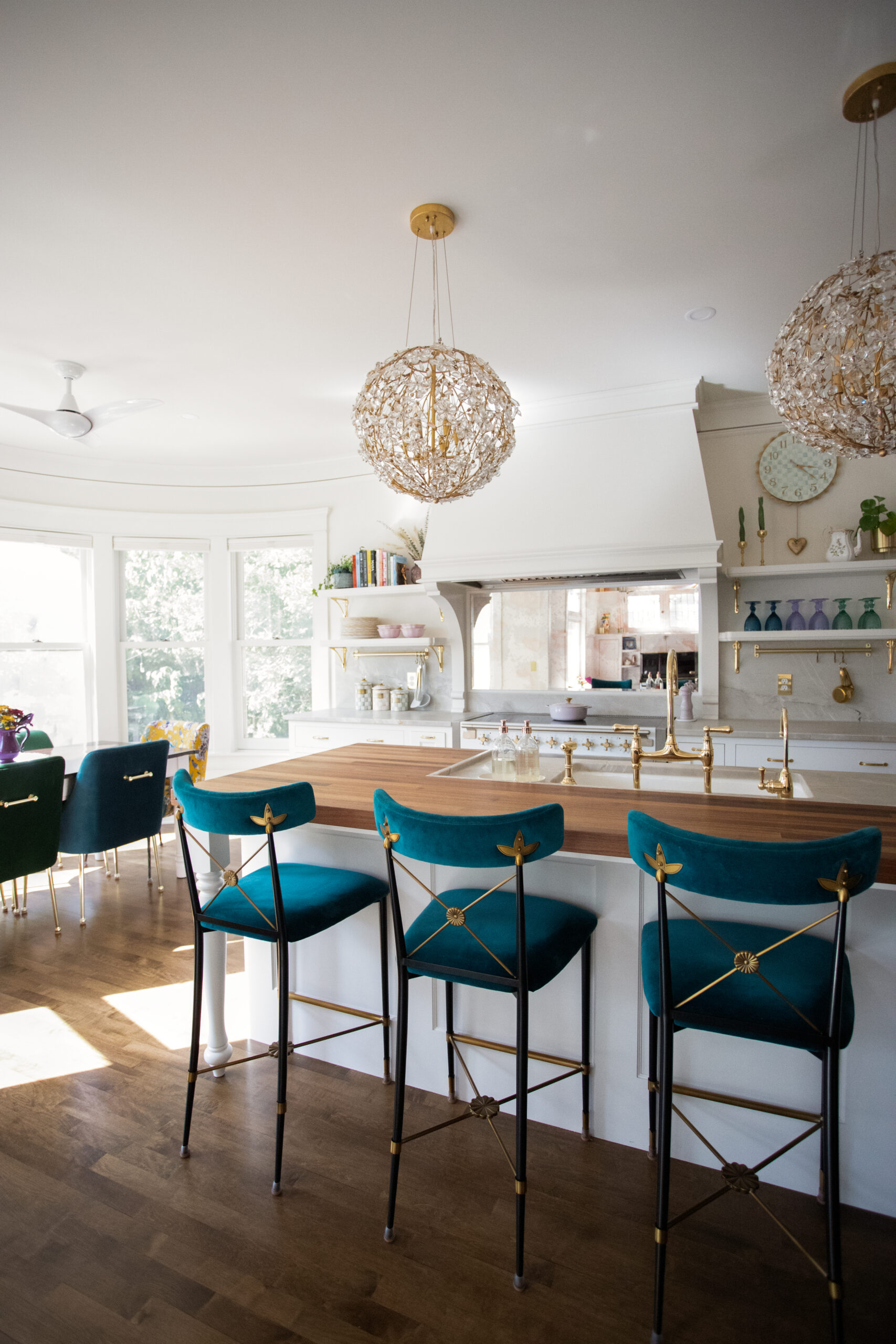
Historic homes benefit from hardware and fixtures with substance and quality, forms that feel timeless rather than trendy, and finishes that relate to the broader palette of the house. Whenever possible we reuse what we can that fits within the new vision for the kitchen and replicate what we cannot, whether that means restoring original trim, refinishing an old hutch, or building new pieces that mirror original profiles. Lighting is equally critical to interior design, and careful incorporation of modern lighting solutions improves both function and aesthetic while respecting historic style.
Integrate Modern Performance Quietly
A historic kitchen should perform like a modern kitchen. Improved lighting, effective ventilation, more storage, and improved mechanical systems are often on the must-have list. The key is integrating those improvements without creating visual noise.
Hidden storage, appliance panels, and built-in organization add function while keeping sightlines clean. Lighting works best in layers:ask lighting under cabinets, warm ambient fixtures, and subtle accents without overdoing any single element. Ventilation can be handled through a hood that respects the kitchen’s scale or by using a discreet insert. Mechanical updates and added insulation improve comfort without changing the room’s look. Modern function doesn’t require a modern, minimalist aesthetic. It requires thoughtful planning and a design-build approach where the same team thinks about aesthetic and construction simultaneously, limiting compromises and keeping character intact through the build phase.
Bringing Vision to Life in Historic Kitchens
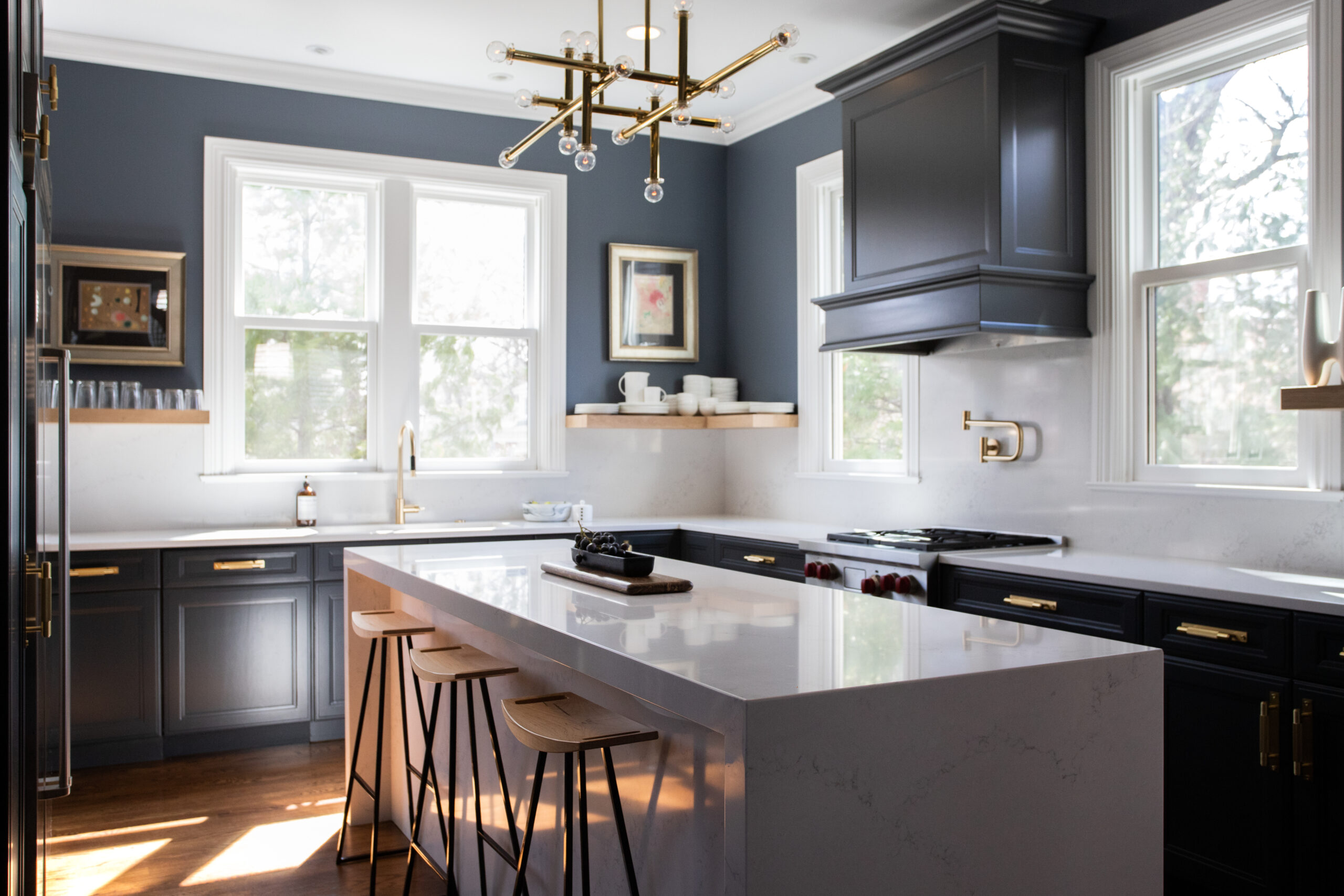
A successful historic kitchen renovation preserves the qualities people love about their home while making daily life easier. At TreHus, we approach these projects by protecting period details, improving layout in targeted ways, matching cabinetry to the home’s language, and choosing materials that age with the space. Our portfolio of kitchens illustrates how modern comfort and historic charm can live in the same room without conflict. If you’re planning to remodel a historic kitchen, the best results come from treating it as part of the whole home rather than a blank slate.