
Indoor-Outdoor Living: Designing Spaces That Extend Beyond the Walls
A well-designed home does not end at its walls. Indoor-outdoor living is shaped by how spaces open up to light, air, and the landscape, using entryways, porches, and the spaces that connect them. When these transitions are thoughtfully considered alongside the home’s design and landscape, the exterior begins to reflect the life inside.
Shaping the Exterior Experience
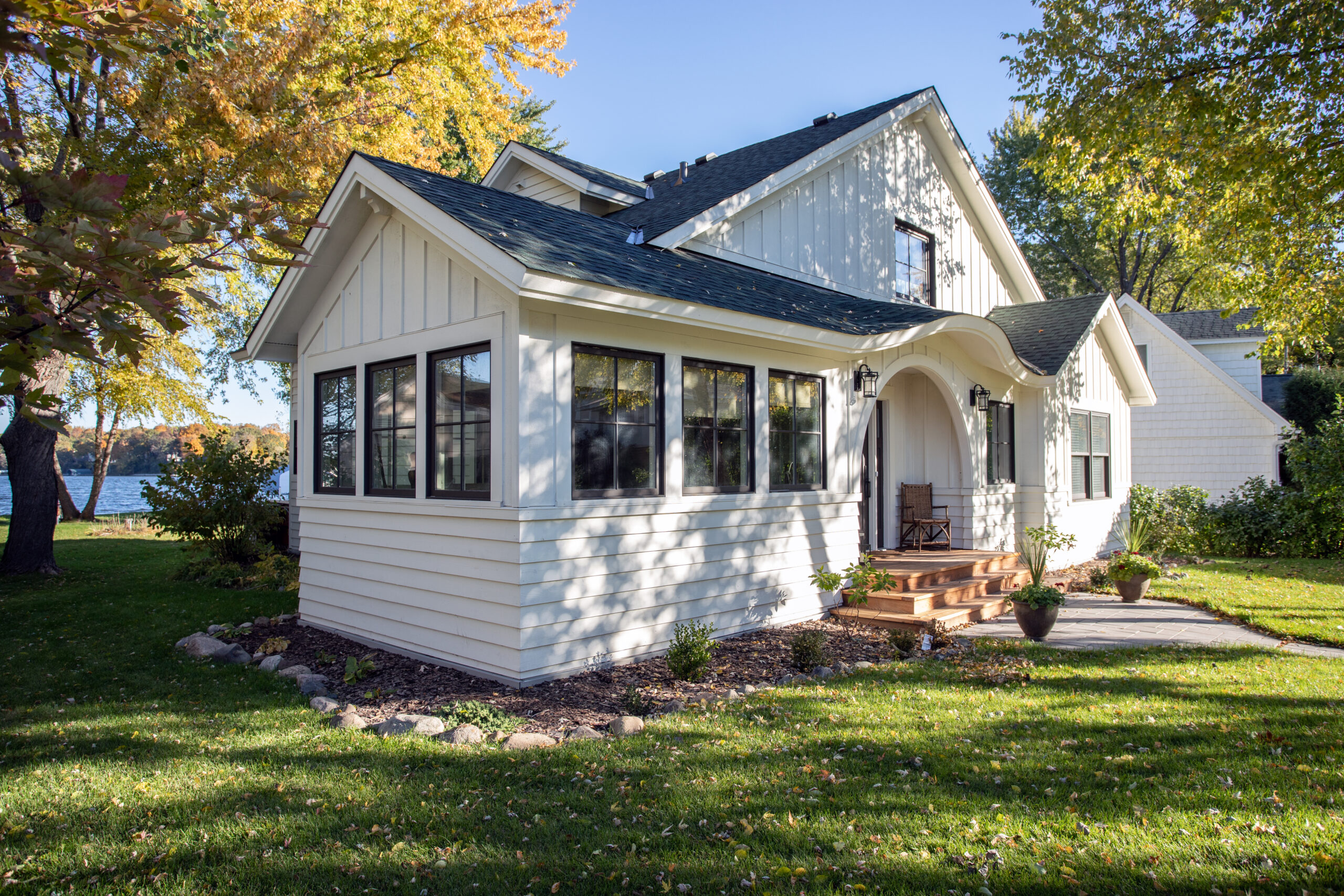
The Orono Remodel illustrates how a home’s exterior can shape the arrival experience and connection to its surroundings. The original exterior felt imbalanced and flat, with horizontal lines and rigid geometric design creating a home that appears one-dimensional and disconnected from its lakefront setting.
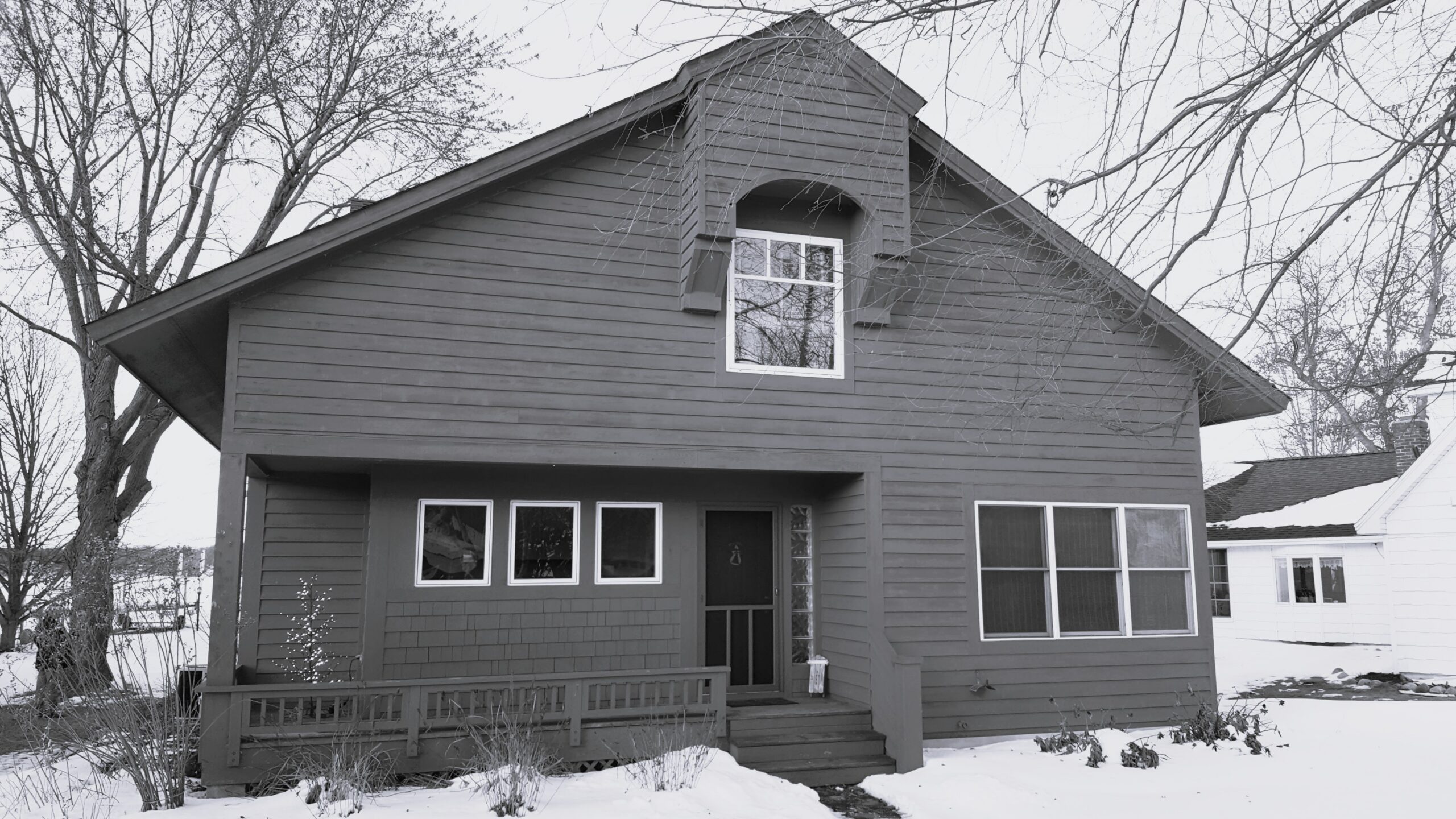
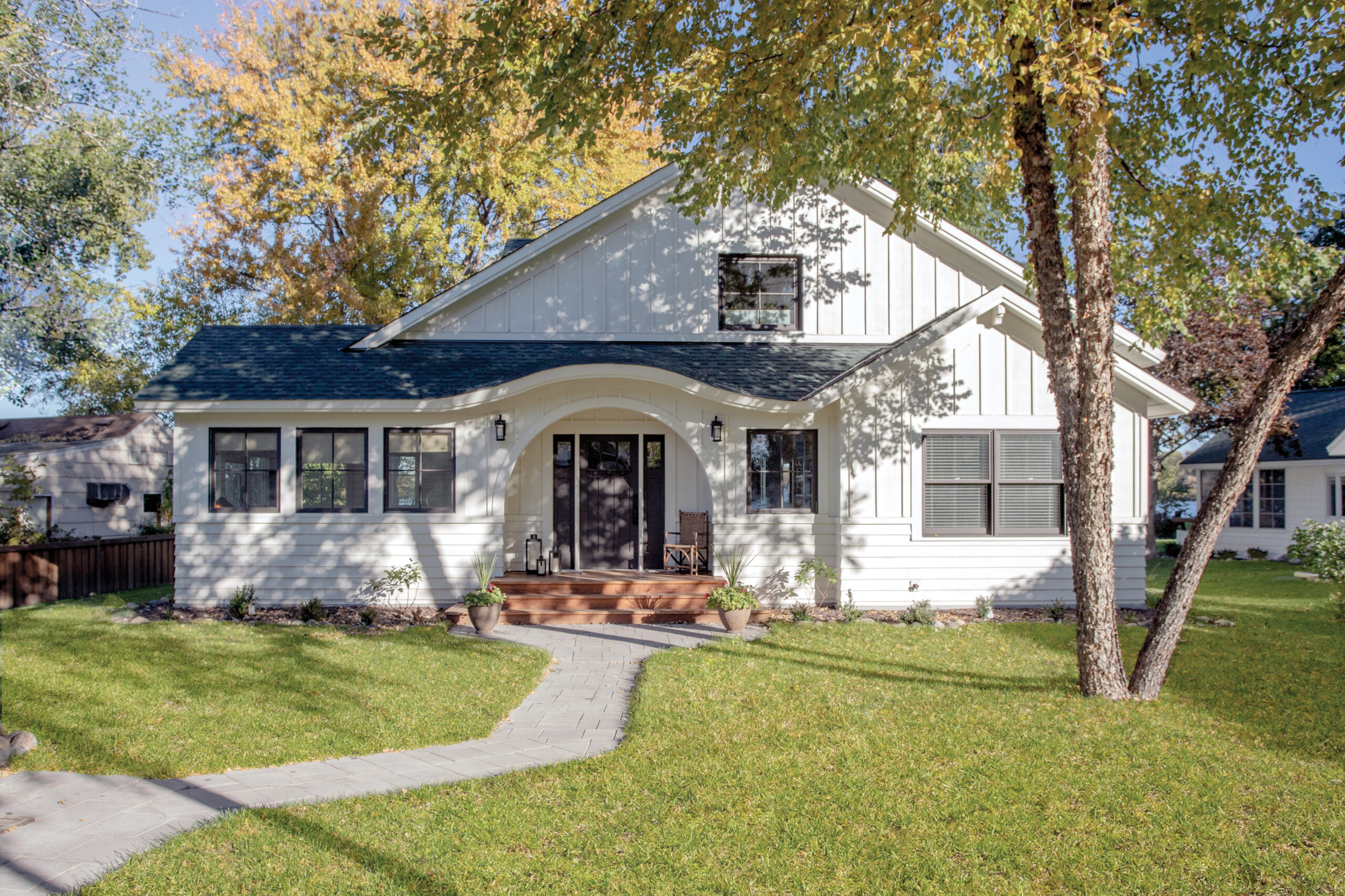
Through a thoughtful design-build process, including an addition and full exterior remodel, this Orono home is now more inviting and in harmony with its natural surroundings. Sophisticated without losing its cottage-style charm, the remodel introduces softer shapes and elements of whimsy—such as an eyebrow roof and arched front entryway—to better connect with the surrounding landscape. The gentle movement in the roofline echoes the lake’s mellow lapping and the organic arches of nearby trees. An understated, contrasting color palette allows the foliage to naturally brighten and define the home.
The experience of arrival sets the tone, but the connection to the landscape continues beyond the front door.
A Porch That Extends the Home
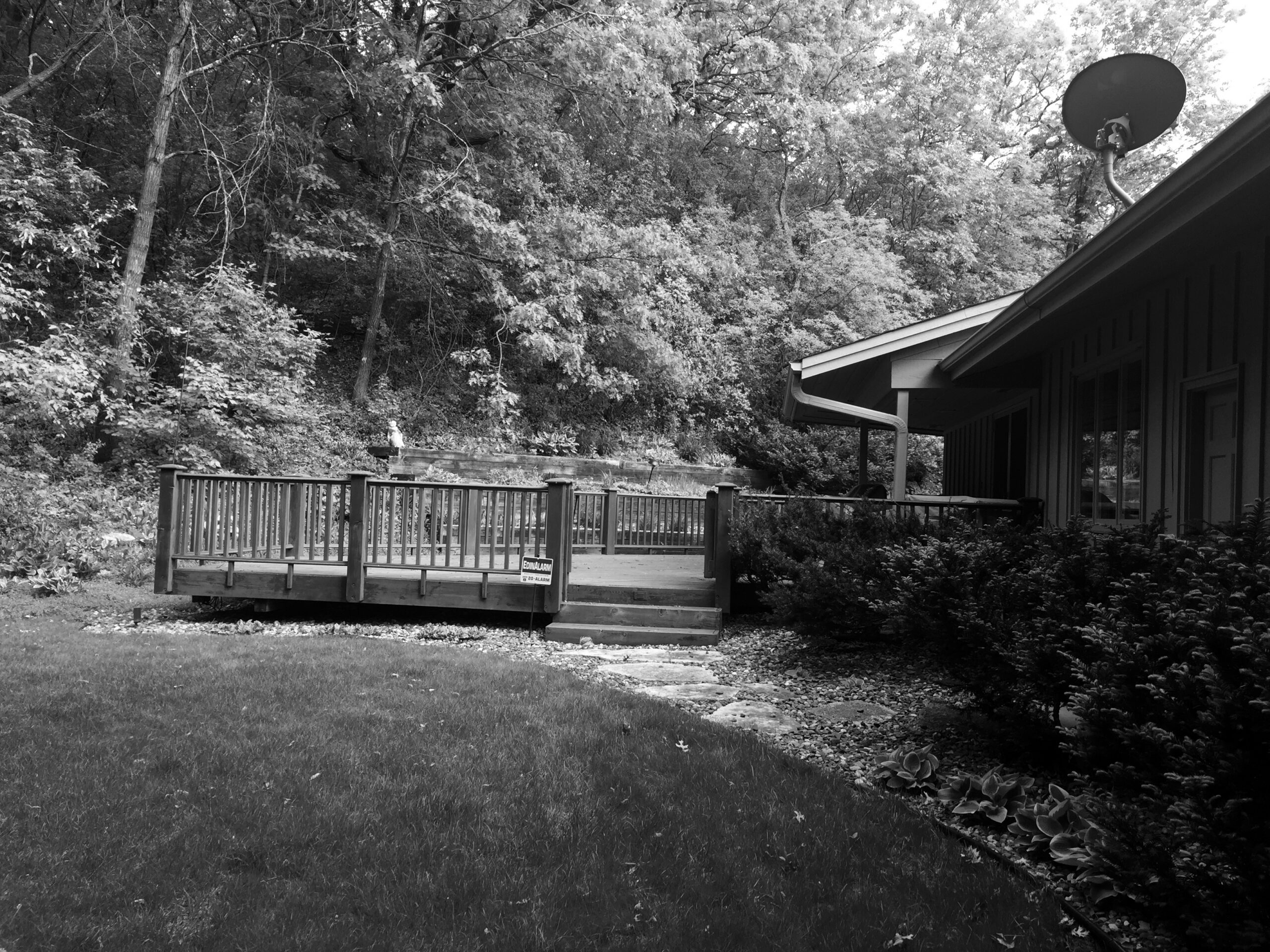
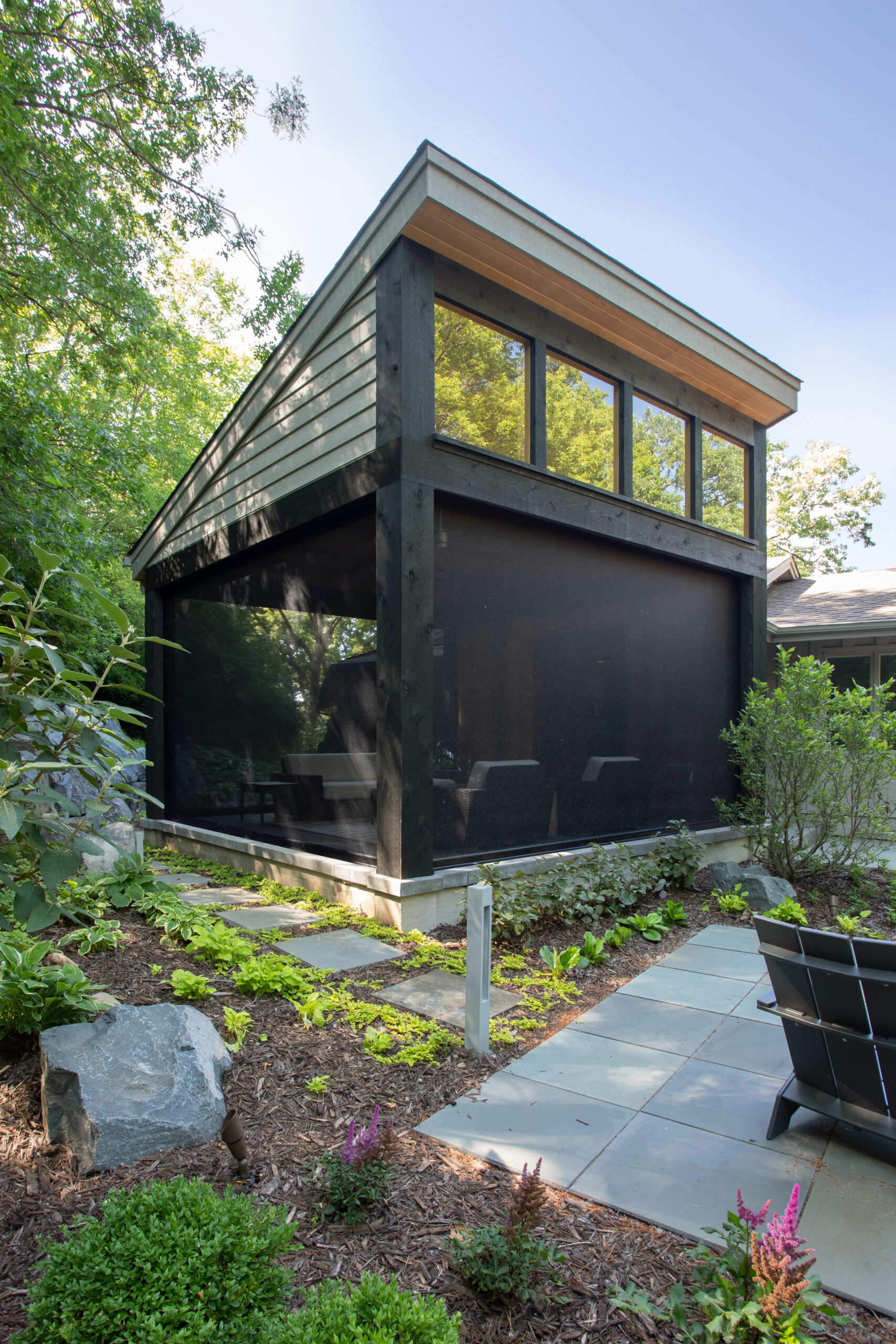
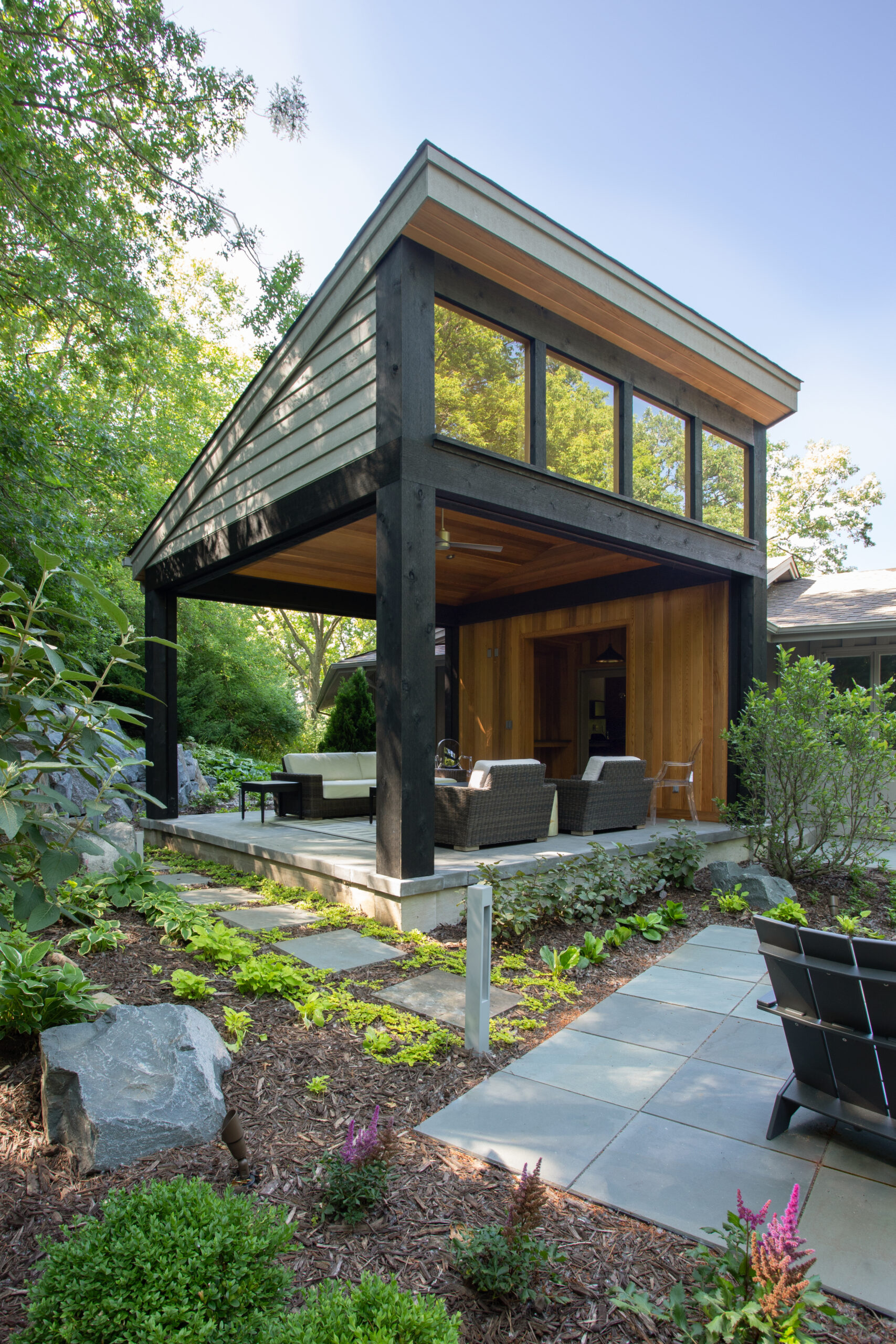
Moving to the backyard, this award-winning Edina Porch Remodel features retractable screens and panoramic views of the forest’s lush greenery. This porch addition grew from years of frustration; while the homeowners valued their outdoor space, the existing porch offered little protection from the elements, especially mosquitoes, which kept them inside during summer evenings. The surrounding trees and rolling land remained a disconnected backdrop through interior windows.
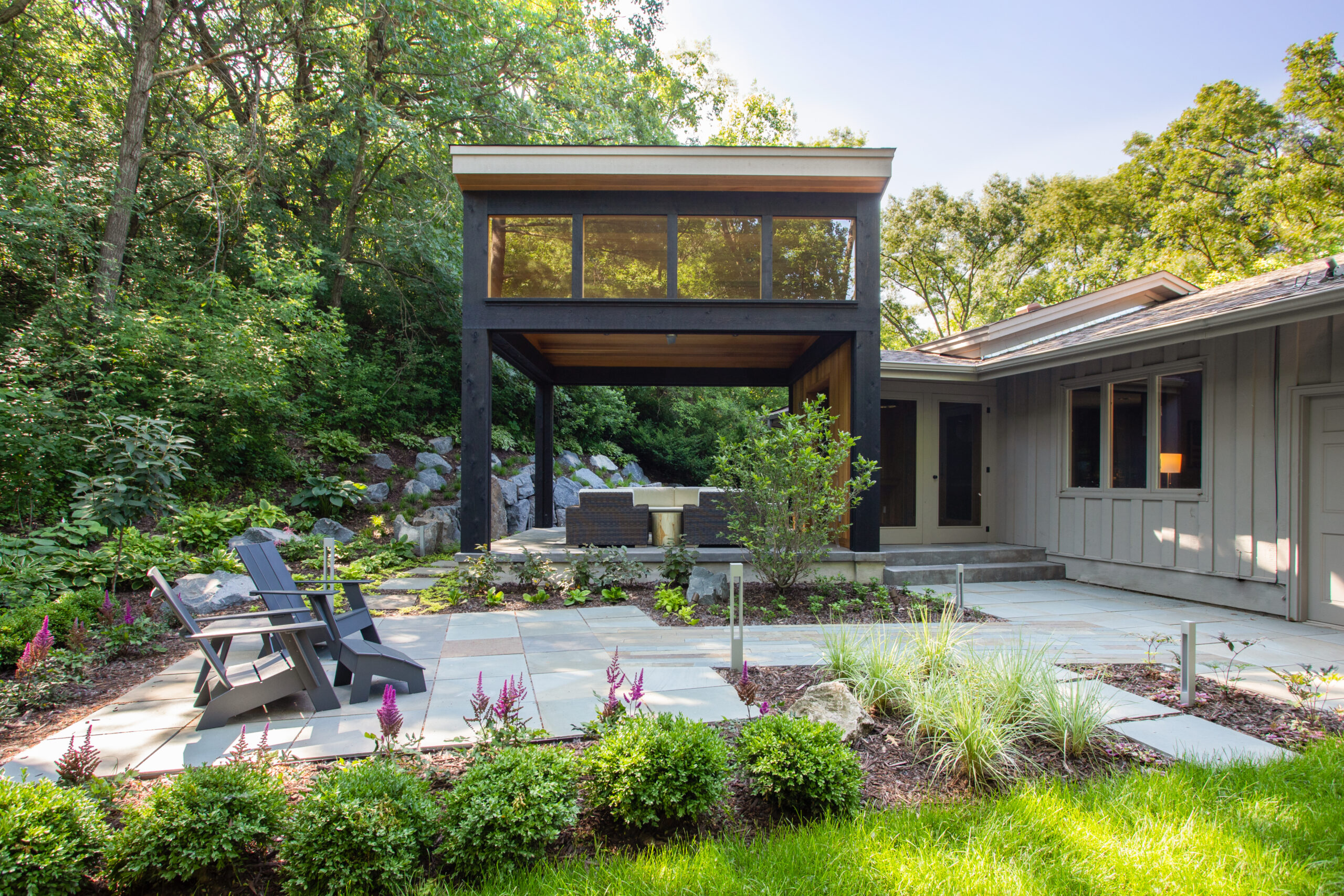
This new, spacious outdoor area seamlessly connects to the house and the surrounding landscaping with stunning cedar wood and simple, clean lines. Retractable screens extend this space’s usability throughout the seasons and create a smooth transition from inside to outside. This stately, well-integrated structure nestles into the surrounding woods while opening to an expansive living space with vaulted ceilings. Here, the landscape is no longer a backdrop. It becomes part of daily life.
When the Entry Changes Everything
Sometimes the most impactful indoor-outdoor transition isn’t a sweeping addition. It’s the front door itself. In the Hyland Sunlit Entry, a dysfunctional entryway had long undermined the connection between the home and daily life. The front door was tucked into the corner of an L-shaped home, hidden from street view by a large garage with no interior access, meaning every trip from car to kitchen required going outside twice.
The redesigned entry transformed not just the exterior, but how the whole home feels to move through. By strategically drawing light in from existing east-facing windows and adding several new ones, the design brightens not only the entry but the adjacent kitchen and living spaces beyond. On a sunny day, the entire main floor is lit without turning on a single light. A single change transformed how the home looks from the street and how it feels to live in, proof that the connection between inside and outside can begin at the very front door.
Each of these exterior projects solved a different problem: a disconnected façade, an unusable porch, a dysfunctional entry. But the answer in every case was the same: close the gap between the home and the life happening around it. When architecture and landscape are considered together, a home feels not only complete, but connected, rooted in its place and responsive to the life within it.